
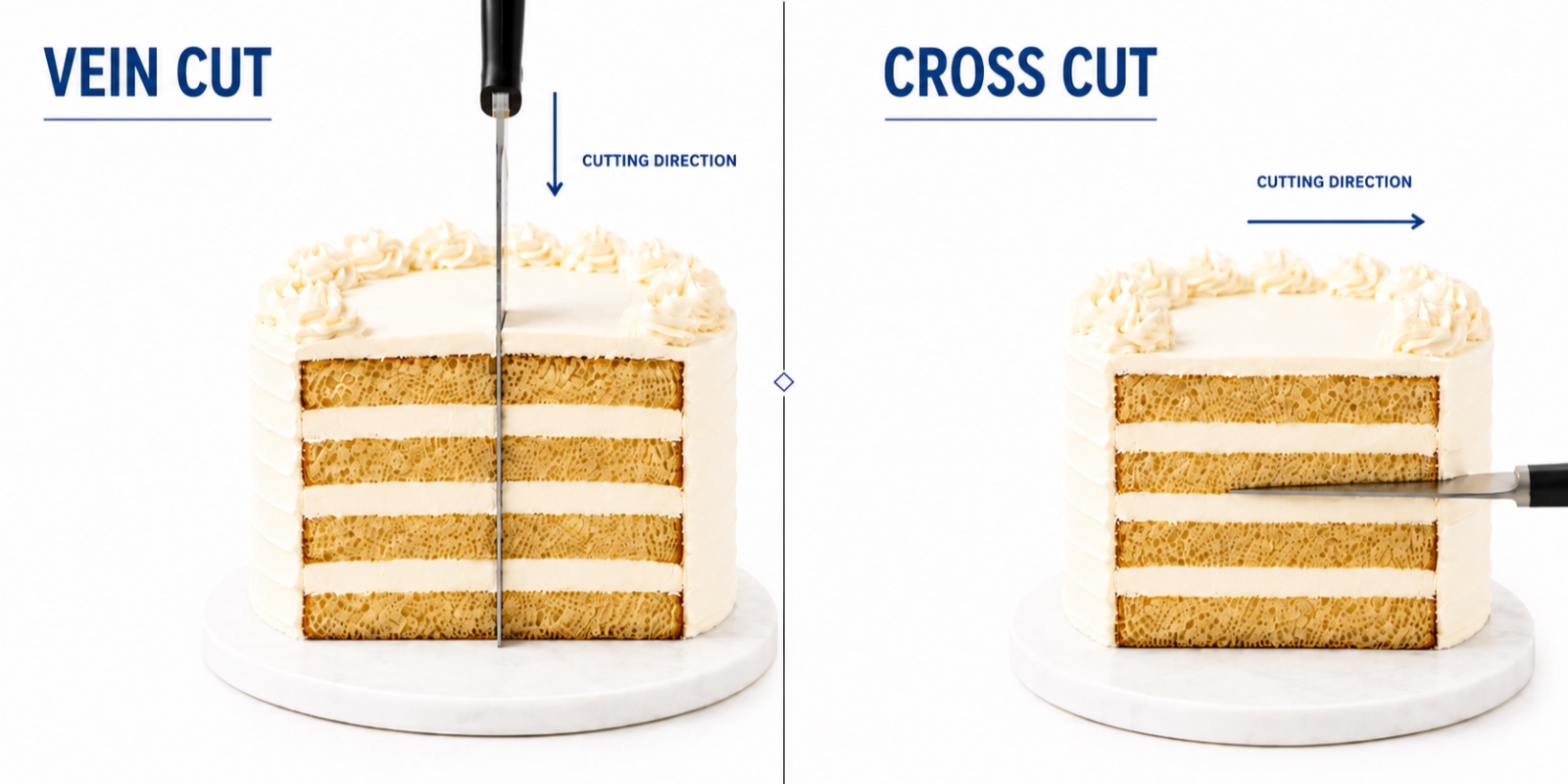
Vein Cut vs. Cross Cut: Why the Same Stone Can Look Completely Different
Marble forms over millions of years — sediment, pressure, water movement, shifting ground. The result is layered, like a cream cake: layer after layer, each one different from the next. That layering is what you're cutting through when you cut stone.
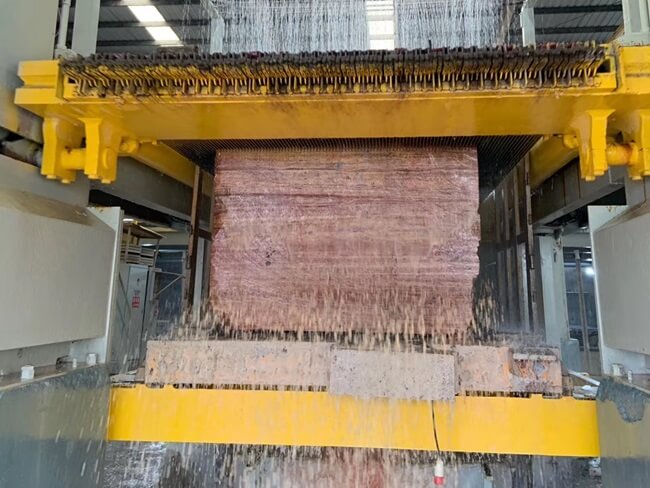
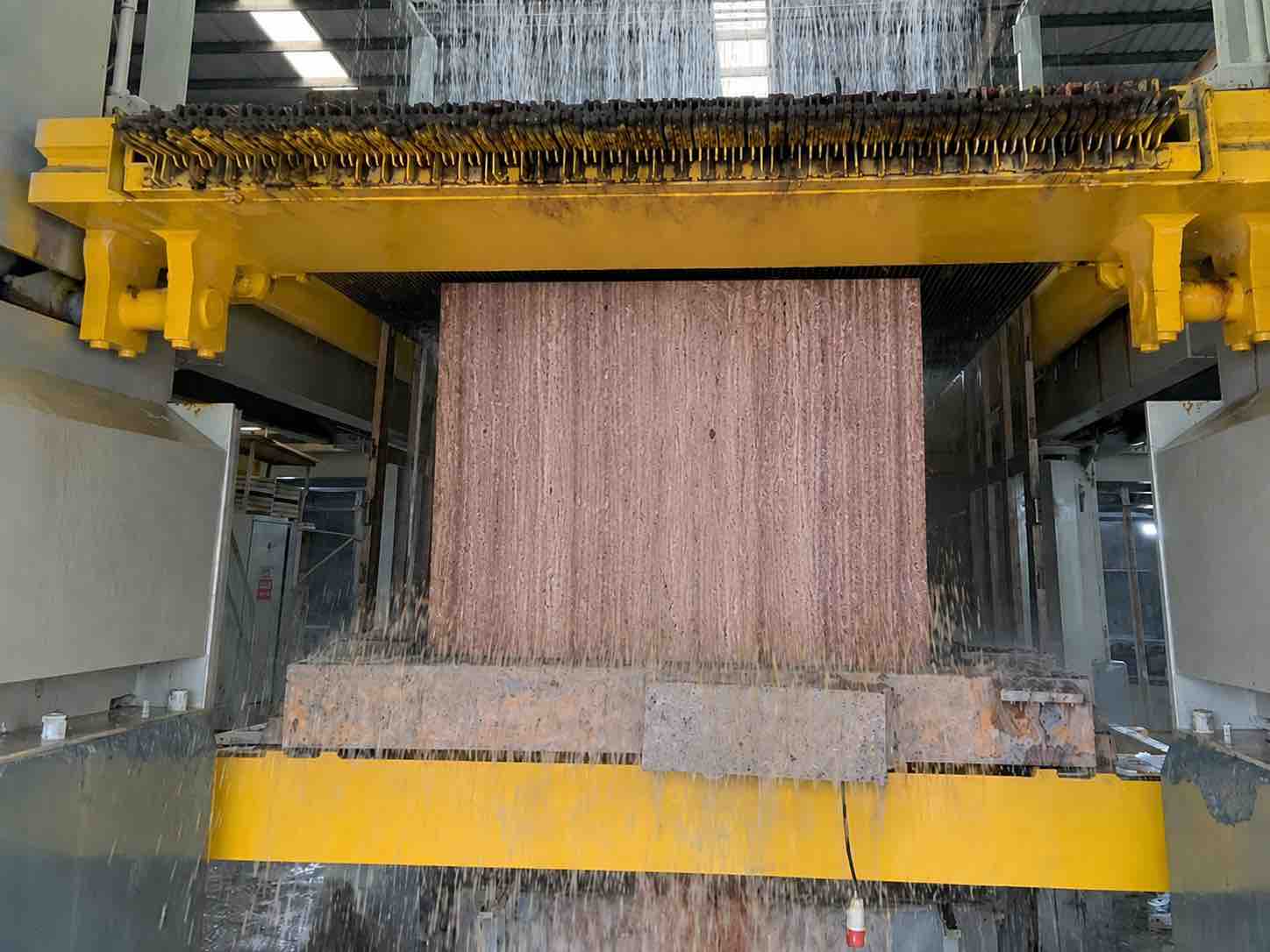
Vein cut is a straight cut through the layers, top to bottom — like slicing the cake straight down. You see every layer as a line on the face. Veins run parallel, mostly horizontal. This is the dominant pattern in travertine.
Cross cut goes the other way — the knife enters from the side, following the layers instead of cutting through them. You get a flat, blended surface instead of stripes. Same block, wildly different plates: one slab can read almost pure cream, the next almost pure cake — light tone next to dark tone, from the exact same stone.
Nothing about the earth is perfectly flat. Layers wave, shift, run diagonal. That's not a flaw — that's the stone's structure moving with millions of years of pressure and water. Vein cut follows that diagonal movement directly, which is also why it's the cut used for bookmatching — mirroring two slabs into one symmetrical pattern.
Uniform, continuous veining or bookmatch — vein cut. Flat, smooth, non-directional surface — cross cut. That's the whole decision.

